
Top-rated independent heating and cooling across Orange County and Southern California
Inside a Proper Seasonal Tune-Up
You keep hearing you should get a tune-up, but nobody tells you what actually happens during one. Fair question. A real maintenance visit is a couple of hours of measuring, cleaning and tightening on your AC or furnace, and it catches the small stuff before it turns into a no-cool call in August. Here is what it covers, and what it honestly cannot fix.
Call (888) 414-3292- Real people on the phone
- 7 days a week
- Quote in writing before any work
Taking calls until 5:00 PM PT
By our service team · vetted by the techs who do this daily
What Neglect Actually Does, Year by Year
Nothing breaks the first summer you skip service. Dust builds on the indoor coil and airflow drops a little. The outdoor coil packs with lint and lawn clippings, so the system runs longer for the same result. Capacitors weaken, contactor points pit, and a refrigerant leak the size of a pinhole slowly starves the system. Three or four years in, you get a compressor working hard in triple-digit inland heat with less airflow than it was designed for. That is when the expensive parts fail, usually on the hottest weekend. Most air conditioning repair calls we run started as something a technician would have caught early.
What a Real Tune-Up Includes
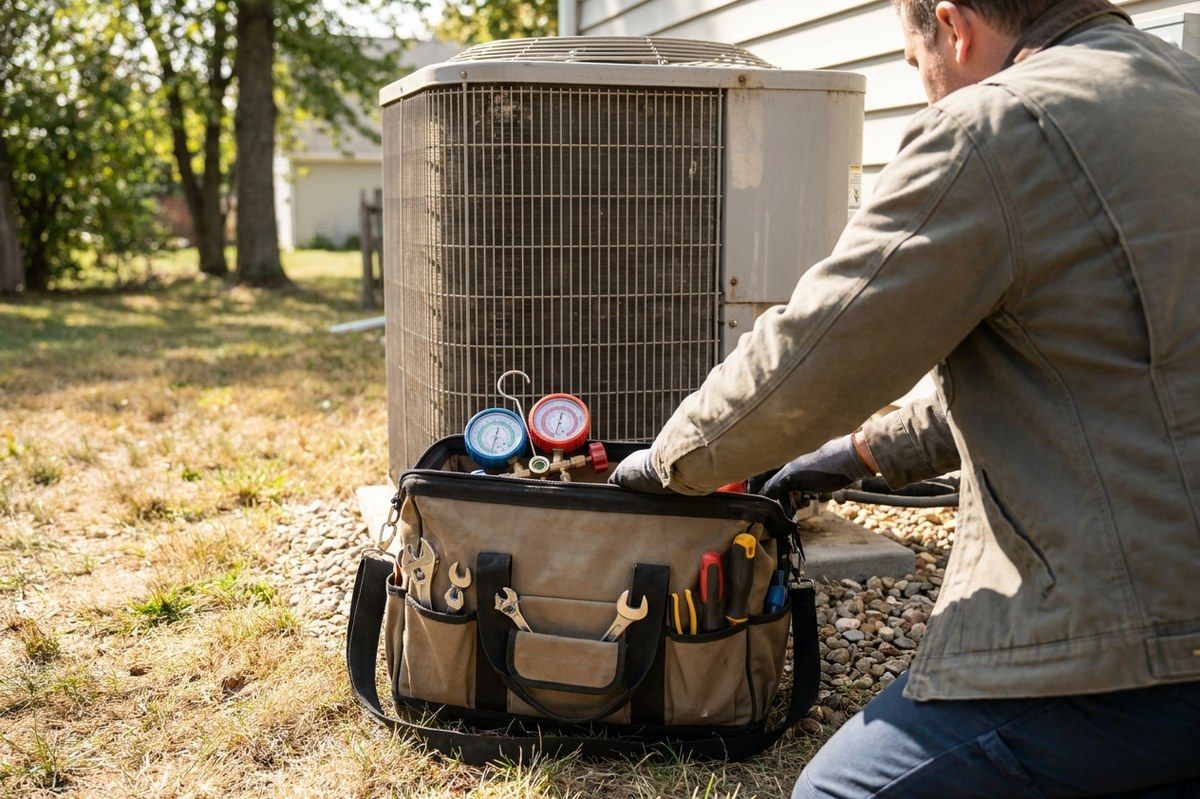
We measure, not just look. On a cooling visit that means temperature split across the coil, refrigerant pressures compared to outdoor conditions, amp draw on the compressor and blower motor, capacitor readings against their rating, and static pressure to see how hard the fan is fighting your ductwork. We wash the outdoor coil, clear the condensate drain, check the float switch, tighten electrical connections and inspect the blower wheel. On heating we check the flame pattern, inspect the heat exchanger, verify safety controls and confirm the flue is drafting. You get told what we found and what it means, in plain numbers.
The Simple Habit, and How Often
Two visits a year is the honest answer: cooling checked in spring before the marine layer burns off for good, heating checked in fall. If you only do one, do cooling, because that is the system carrying the load across most of California, Arizona and Nevada. Between visits, your job is the filter. Check it monthly and change it when it looks grey, which in most homes is every one to three months. A clogged filter is the single most common cause of the calls we get for weak airflow. Also keep two feet clear around the outdoor unit and make sure supply vents are not blocked by furniture or rugs.
What a Tune-Up Will Not Fix
Maintenance is not a repair, and it will not solve a design problem. If your returns are undersized, which is common in older stucco tract homes, a clean coil helps but the system still cannot breathe properly. Ductwork in a hot attic with crushed runs or disconnected boots needs sealing or replacement, not a checkup. A system that is too small for a west-facing second floor will still struggle at 4pm. And a compressor already running hot for years may fail regardless of what we clean. We will tell you when the fix is bigger than the visit instead of selling you another tune-up.
Warning Signs You Are Already Past Due
Call for air conditioner repair if the system runs constantly without reaching the setting, if you hear a hum or click then nothing, or if the air from the vents feels only slightly cool. Water stains on the ceiling below an attic unit mean the drain is backing up. Ice on the refrigerant line means low airflow or low charge, and running it that way risks the compressor. On heating, short cycling, a burning smell that does not clear, or a yellow flickering burner flame all mean stop and get heater repair. If you smell gas or a carbon monoxide alarm sounds, leave the house immediately, call 911 or your gas utility from outside, then call us.
Inside a Proper Seasonal Tune-Up — common questions
Is a tune-up worth it on a newer system?
Yes. New equipment has tighter tolerances and less forgiveness for low airflow or a slightly off refrigerant charge. Annual checks also keep documentation of maintenance, which most manufacturer warranties expect if you ever file a parts claim.
Will a tune-up lower my bill?
A clean coil and correct airflow help the system do its job with less runtime, so usually yes. We will not put a number on it. Too much depends on your insulation, ductwork, windows and how you set the thermostat.
Can I just change the filter myself and skip service?
Filter changes are the most useful thing you can do, and we encourage it. But they will not catch a weak capacitor, a slow refrigerant leak, a pitted contactor or a cracked heat exchanger. Those need meters and eyes on the equipment.
How it works
- Step 1
Tell us the symptom
Call or fill in the quote form with what you notice. Warm air, no air, short cycling, a smell, a noise. Details like when it started help us bring the right parts on the first visit.
- Step 2
We diagnose on site
A technician checks the thermostat, the electrical side, refrigerant performance, airflow and the return sizing. We test rather than guess, then explain what failed and why in plain language before any work starts.
- Step 3
Repair and verify
We make the repair, then measure temperatures and airflow at the vents to confirm the system holds. If a duct or return is starving the equipment, we tell you what it would take to fix it.
- A real person answers
- Open 7 days
- Written quote before work starts
Why homeowners call us
- We know stucco tract homesMuch of the housing we service was built fast with returns too small for the tonnage installed. That single duct in the hallway explains a lot of weak airflow complaints, and we look at it before we sell you equipment.
- Marine mornings, inland afternoonsCoastal condos fight humidity and salt air, while inland homes run long afternoon cycles in triple digits. Same system, different failure patterns. We set expectations for the climate your house actually sits in.
- Diagnosis you can followYou get told which part failed, what it does and what happens if it waits. No hurry, no scare talk. If the honest answer is that the system has a few seasons left, we say that.
- Repair before replacementMost calls end in a repair, not a new system. We quote replacement only when a repair will not hold or the cost stops making sense, and we explain the reasoning either way.
- All major brands, gas & electricFrom Carrier and Trane to Lennox, Goodman, Rheem and Bryant, serviced independently.
- Straight answersWhen a replacement beats a repair, we tell you, sometimes before we roll a truck.
About this guide
Safe checks done and it still misbehaves? That's a real fault
Mention which checks you ran when you book; it speeds up the visit.
- A real person answers
- Open 7 days
- Written quotes
- All major brands
- Gas & electric
Rather not call? Get a free quote →