
Top-rated independent heating and cooling across Orange County and Southern California
Giving the Condenser Room to Breathe
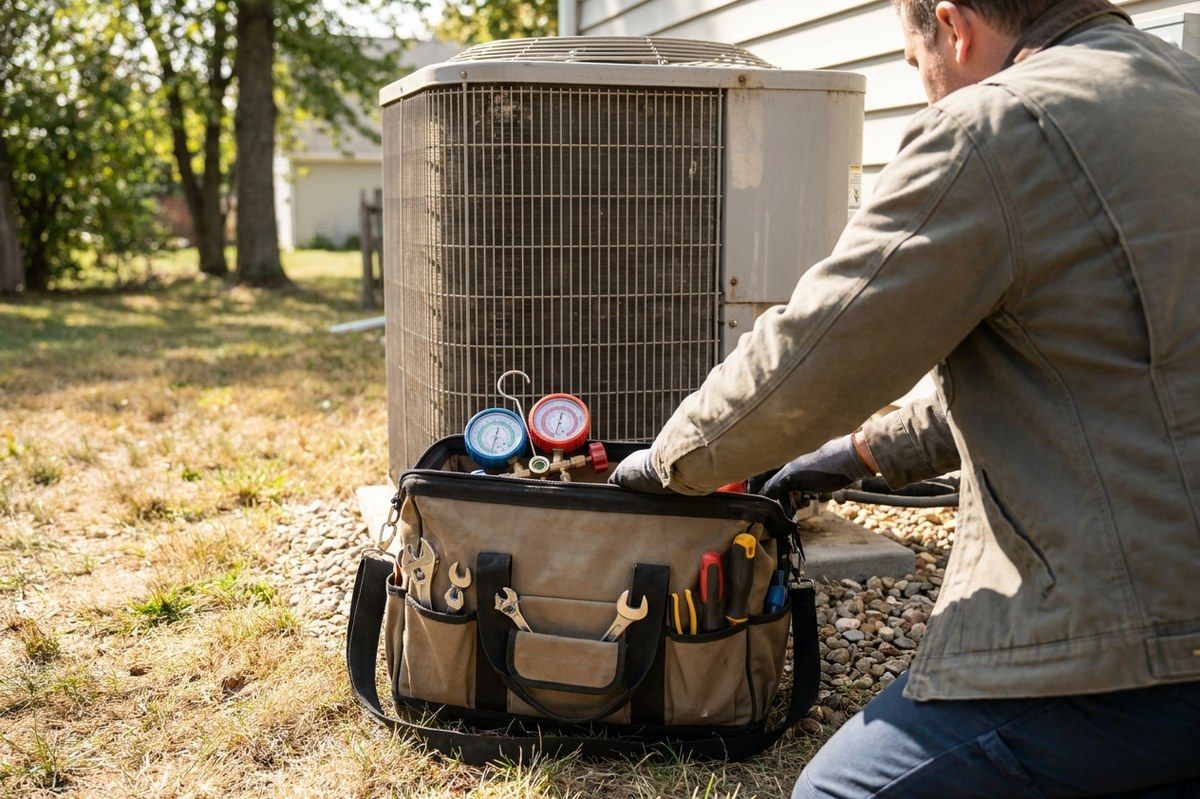
Your outdoor unit sits out back behind the fence, and honestly, most homeowners forget it exists until the house stops cooling. Then a technician pulls a bougainvillea vine out of the fan grille and points at the trash cans stacked against the side. Here is what needs to stay clear around that unit, how much room it wants, and the signs it has already been choked too long.
Call (888) 414-3292- Real people on the phone
- 7 days a week
- Quote in writing before any work
Taking calls until 5:00 PM PT
By our service team · vetted by the techs who do this daily
What Crowding Does to the Unit Over Time
The outdoor unit dumps heat from your house into the air around it. If that air cannot move, the heat has nowhere to go, so the unit pulls the same hot air back through the coil again and again. Pressures climb, the compressor runs hotter and longer, and cooling drops off on exactly the afternoons you need it. Leaves and grass clippings pack into the coil fins and act like a blanket. Give it a couple of seasons and you get short cycling, a tripped breaker on hot days, and compressor wear that no cleaning reverses. Most of the emergency air conditioning repair calls we run in August start as a clearance problem in April.
How Much Room It Actually Needs
Aim for two feet of open space on every side and about five feet of clear air above the fan. Nothing should sit on top of the unit, and nothing should lean against the cabinet. Fences and side yard walls count, so if the unit sits in a narrow run between the house and the block wall, that space needs to stay genuinely empty. Keep planters, storage bins, pool chemicals, hoses, patio furniture and firewood somewhere else. Dryer vents and irrigation spray heads pointed at the coil cause their own problems, lint mats the fins and hard water leaves mineral crust. Concrete or gravel underneath beats bark mulch, which blows straight into the base pan.
The Simple Habit That Prevents All of It
Once a month, walk out to the unit and look at it. That is the whole habit. Pull weeds and vines away from the cabinet, sweep leaves and seed pods off the base, and move anything that has migrated into the two foot zone. Look at the top grille and clear it. If shrubs are closing in, trim them back so you can see the full cabinet on every side. Change your filter inside the house on the same trip so you only have to remember one thing. Do this in spring before the first real heat and again in fall after the trees drop, and you have handled the majority of what strangles outdoor units across the region.
Warning Signs It Has Already Gone Too Long
The house takes longer to reach the thermostat setting than it did last summer, and the unit barely stops running in the afternoon. Air from the vents feels cool but weak. The breaker for the outdoor unit trips on the hottest days. You hear the fan changing pitch or a grinding sound as debris rubs the blade. Ice on the refrigerant lines is another one, and so is a coil so packed with dirt you cannot see light through the fins. Any of those means clearing the space is no longer enough on its own and the system needs hands on it. Call us for air conditioner repair before the compressor decides for you.
What We Check When We Come Out
We start outside, because that is where the answer usually is. We look at clearance, coil condition, fan operation and how the unit is sitting on its pad. Then we take pressure and temperature readings to see whether the system is only heat starved or whether something has already been damaged, and we check the electrical connections at the disconnect. Inside, we look at the return and the filter, since undersized returns are common in tract homes and coastal condos and they make every outdoor problem worse. You get told what we found in plain terms, what needs doing now, and what can wait. We handle AC repair and heating repair across Arizona, California and Nevada.
If You Smell Gas or Suspect Carbon Monoxide
Leave the building first. Get everyone outside and away, do not flip switches, and call 911 or your gas utility from outside. Then call us and we will come look at the equipment once the gas side is safe. This applies to a rotten egg smell near a furnace or water heater, a carbon monoxide alarm going off, or anyone in the house getting headaches and nausea that clear up when they step outdoors. Do not try to trace a gas smell yourself and do not open up any part of a furnace. Gas work and high voltage work are ours to handle, not yours. Everything in this guide about clearance is outdoor, low risk, and safe to do with your hands.
When it is time to book
Giving the Condenser Room to Breathe — common questions
Can I build a fence or cover over the outdoor unit to hide it?
You can screen it if you keep two feet of open air on all sides and five feet above, with slats that let air pass. Solid boxes and tight enclosures trap heat and cause the same problems as overgrown shrubs.
Is it safe to spray the outdoor coil with a hose?
Rinsing loose leaves off the outside of the cabinet with a gentle hose is fine. Do not pressure wash the fins, do not open the unit, and do not touch electrical panels. Deeper coil cleaning is our job.
Does the unit need clearance in winter too?
Yes. Heat pumps run year round, and blocked airflow hurts heating just like cooling. Leaves and seed pods pile up fast in fall, so keep the fall walkaround on your list even after the heat breaks.
How it works
- Step 1
Tell us the symptom
Call or fill in the quote form with what you notice. Warm air, no air, short cycling, a smell, a noise. Details like when it started help us bring the right parts on the first visit.
- Step 2
We diagnose on site
A technician checks the thermostat, the electrical side, refrigerant performance, airflow and the return sizing. We test rather than guess, then explain what failed and why in plain language before any work starts.
- Step 3
Repair and verify
We make the repair, then measure temperatures and airflow at the vents to confirm the system holds. If a duct or return is starving the equipment, we tell you what it would take to fix it.
- A real person answers
- Open 7 days
- Written quote before work starts
Why homeowners call us
- We know stucco tract homesMuch of the housing we service was built fast with returns too small for the tonnage installed. That single duct in the hallway explains a lot of weak airflow complaints, and we look at it before we sell you equipment.
- Marine mornings, inland afternoonsCoastal condos fight humidity and salt air, while inland homes run long afternoon cycles in triple digits. Same system, different failure patterns. We set expectations for the climate your house actually sits in.
- Diagnosis you can followYou get told which part failed, what it does and what happens if it waits. No hurry, no scare talk. If the honest answer is that the system has a few seasons left, we say that.
- Repair before replacementMost calls end in a repair, not a new system. We quote replacement only when a repair will not hold or the cost stops making sense, and we explain the reasoning either way.
- All major brands, gas & electricFrom Carrier and Trane to Lennox, Goodman, Rheem and Bryant, serviced independently.
- Straight answersWhen a replacement beats a repair, we tell you, sometimes before we roll a truck.
About this guide
If the safe checks didn't fix it, the fault is real
Report what you saw during the checks and we handle the rest. A minute to book.
- A real person answers
- Open 7 days
- Written quotes
- All major brands
- Gas & electric
Rather not call? Get a free quote →