
Top-rated independent heating and cooling across Orange County and Southern California
The House Feels Clammy Even With the AC Running
The thermostat says 74 and the AC is running, but the air still feels heavy. Your skin stays damp, the bathroom mirror takes forever to clear, and the house smells a little musty by afternoon. You are not imagining it. Cooling and drying are two different jobs, and a system can do one while barely doing the other. Here is what that usually means and what to do next.
Call (888) 414-3292- Real people on the phone
- 7 days a week
- Quote in writing before any work
Taking calls until 5:00 PM PT
By our service team · vetted by the techs who do this daily
What Clammy Air Actually Tells You
An air conditioner removes humidity as a side effect of cooling. Warm indoor air passes over a cold coil, moisture condenses on the fins, and it drains away. If the house feels damp at the right temperature, the coil is not staying cold enough or the air is moving past it too fast to give up its moisture. That points at airflow, refrigerant charge, or run time. In coastal areas the marine layer loads the house with moisture every morning, and inland afternoon heat means the system short cycles instead of running long enough to dry anything out. Both patterns show up across California, Arizona and Nevada.
Cause Family One: Airflow and Filters
This is the cheapest thing to rule out and the most common. A loaded filter starves the coil, and a coil that cannot breathe cannot condense water. The same goes for closed or blocked vents and undersized returns, which we see constantly in stucco tract homes with one small return hallway grille. If air races through an oversized duct path it also skips the moisture removal step. Start with a clean filter of the correct size, confirm supply and return vents are open and not covered by furniture or rugs, and clear leaves and shrubs back from the outdoor unit so it can reject heat properly.
Cause Family Two: Run Time and Sizing
A system that is too large for the house cools the thermostat fast and shuts off before the coil has been wet long enough to drain. You get cold, damp air and short cycles. Check your fan setting first. If the blower is set to ON instead of AUTO, it keeps pushing air over a wet coil after the compressor stops and re-evaporates that moisture right back into the house. Switch it to AUTO and see what changes over a couple of days. Beyond that, sizing and cycle length are measurement questions, and guessing at them usually makes the comfort problem worse.
Cause Family Three: Refrigerant, Coils and Drainage
A low charge or a dirty evaporator coil leaves the coil warmer than it should be, so less moisture condenses. A clogged condensate drain or a cracked pan means the water that did condense sits in the cabinet and evaporates back into your air, which is where the musty smell usually comes from. Refrigerant work is not a homeowner job. There are no safe steps to give you there, and a system low on refrigerant has a leak that needs finding. If you see standing water, a wet ceiling stain under an attic unit, or the drain pan overflowing, shut the system off at the thermostat and call for air conditioning repair.
What We Do Differently on a Humidity Call
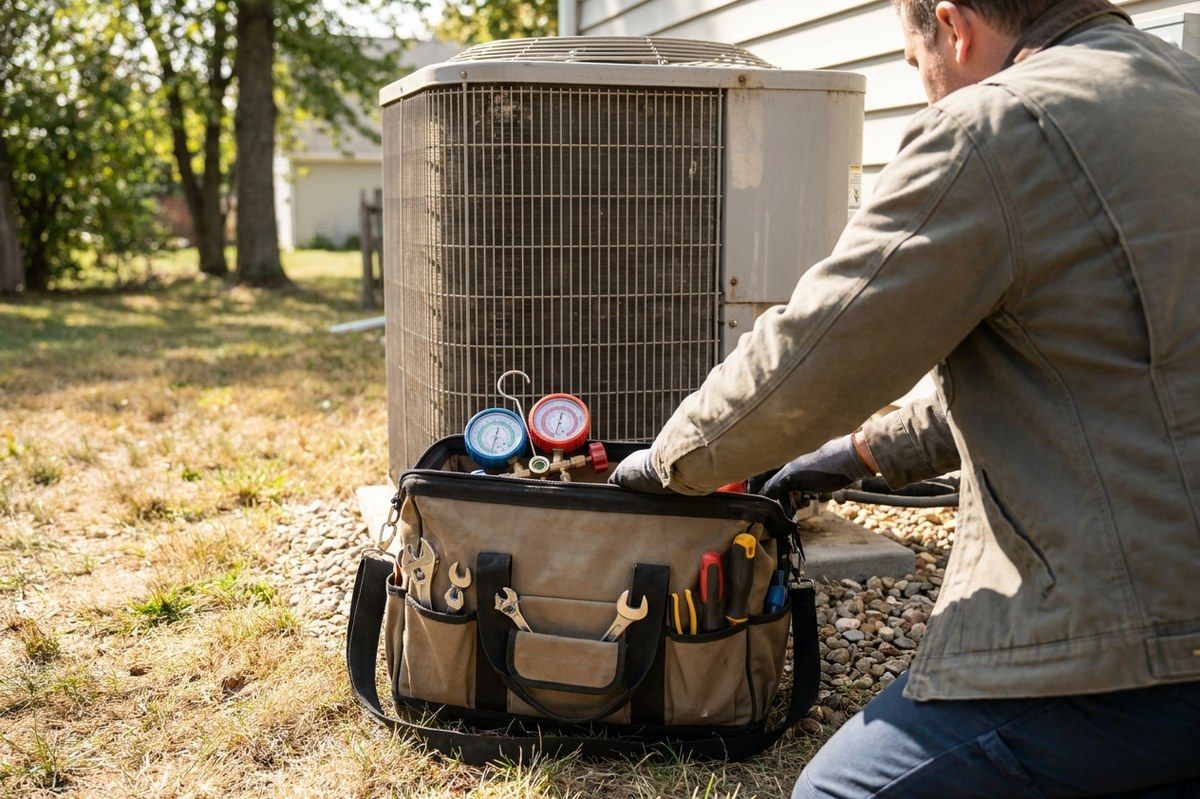
We measure instead of guess. That means static pressure across the coil to see whether the duct system can actually move design airflow, temperature split across the return and supply, indoor humidity readings taken over a full cycle, and superheat and subcool to judge charge. We inspect the evaporator coil, the drain line and the pan, and we check the blower speed tap against what the equipment and the ductwork need. Often the fix is airflow and controls rather than new equipment. When it is a duct or return problem, we will tell you what the modification involves so you can decide. Call Price Air HVAC and we will come read the numbers.
Safety Note Before You Touch Anything
If you smell gas anywhere in the house, leave the building first, then call 911 or your gas utility from outside, then call us. Same for a carbon monoxide alarm going off. Do not go looking for the source and do not switch anything on or off. Outside of that, the checks that are safe for a homeowner are simple: thermostat batteries and settings, a tripped breaker, a fresh filter, clearing debris away from the outdoor unit, and confirming vents are open. Anything involving gas, refrigerant or high voltage stays with a technician. That is not us being cautious for its own sake, those are the parts that hurt people.
The House Feels Clammy Even With the AC Running — common questions
Why does my house feel humid when the AC is set cold?
Cold air and dry air are not the same thing. If the system cools fast and shuts off, the coil never stays wet long enough to drain moisture. Short cycles, high fan speed and a FAN ON setting all cause this.
Will a dehumidifier fix it?
A portable unit helps one room and hides the real cause. If the AC is short cycling, low on refrigerant or starved for airflow, the underlying problem keeps growing. Get the system measured first, then decide.
Should I run the fan continuously to help?
Usually no. Continuous fan blows air across a wet evaporator coil after the compressor stops and pushes that moisture back into the house. Set the fan to AUTO and see whether the clammy feeling eases.
How it works
- Step 1
Tell us the symptom
Call or fill in the quote form with what you notice. Warm air, no air, short cycling, a smell, a noise. Details like when it started help us bring the right parts on the first visit.
- Step 2
We diagnose on site
A technician checks the thermostat, the electrical side, refrigerant performance, airflow and the return sizing. We test rather than guess, then explain what failed and why in plain language before any work starts.
- Step 3
Repair and verify
We make the repair, then measure temperatures and airflow at the vents to confirm the system holds. If a duct or return is starving the equipment, we tell you what it would take to fix it.
- A real person answers
- Open 7 days
- Written quote before work starts
Why homeowners call us
- We know stucco tract homesMuch of the housing we service was built fast with returns too small for the tonnage installed. That single duct in the hallway explains a lot of weak airflow complaints, and we look at it before we sell you equipment.
- Marine mornings, inland afternoonsCoastal condos fight humidity and salt air, while inland homes run long afternoon cycles in triple digits. Same system, different failure patterns. We set expectations for the climate your house actually sits in.
- Diagnosis you can followYou get told which part failed, what it does and what happens if it waits. No hurry, no scare talk. If the honest answer is that the system has a few seasons left, we say that.
- Repair before replacementMost calls end in a repair, not a new system. We quote replacement only when a repair will not hold or the cost stops making sense, and we explain the reasoning either way.
- All major brands, gas & electricFrom Carrier and Trane to Lennox, Goodman, Rheem and Bryant, serviced independently.
- Straight answersWhen a replacement beats a repair, we tell you, sometimes before we roll a truck.
About this guide
Checked everything on the list and it still acts up?
Describe what you found and we'll take it from there. Booking takes about a minute.
- A real person answers
- Open 7 days
- Written quotes
- All major brands
- Gas & electric
Rather not call? Get a free quote →